Shrimp export traceability starts in the pond
Shrimp traceability for export: the pond-level record behind a shipment, from stocking and treatments to harvest by destination.
4 min read
When an importer or a certification scheme asks about a shrimp lot, the question travels backwards: from the carton to the container, from the container to the plant, from the plant to the harvest and from the harvest to the pond. The processing plant can answer its part. Everything that happened during culture can only be answered by the farm, and only if it was recorded as it happened.
This guide covers the pond-level record that stands behind an export shrimp shipment. For the wider framework of traceability requirements and what auditors ask for, see aquaculture traceability records.
The questions that come back from the buyer
However different each buyer’s forms are, the questions about the culture reduce to a few:
- Origin: which pond or ponds the shrimp in this lot came from.
- Stocking: when that pond was stocked and with which postlarvae.
- Feed: what feed it received during the cycle.
- Treatments: what was applied, when, and whether the withdrawal period had ended by harvest.
- Harvest: when it was harvested and where each part went.
None of these answers can be assembled well after the fact. If they live in a field notebook, a message group and the biologist’s memory, the day the question arrives the farm reconstructs instead of looking up.
Harvest is where the chain starts
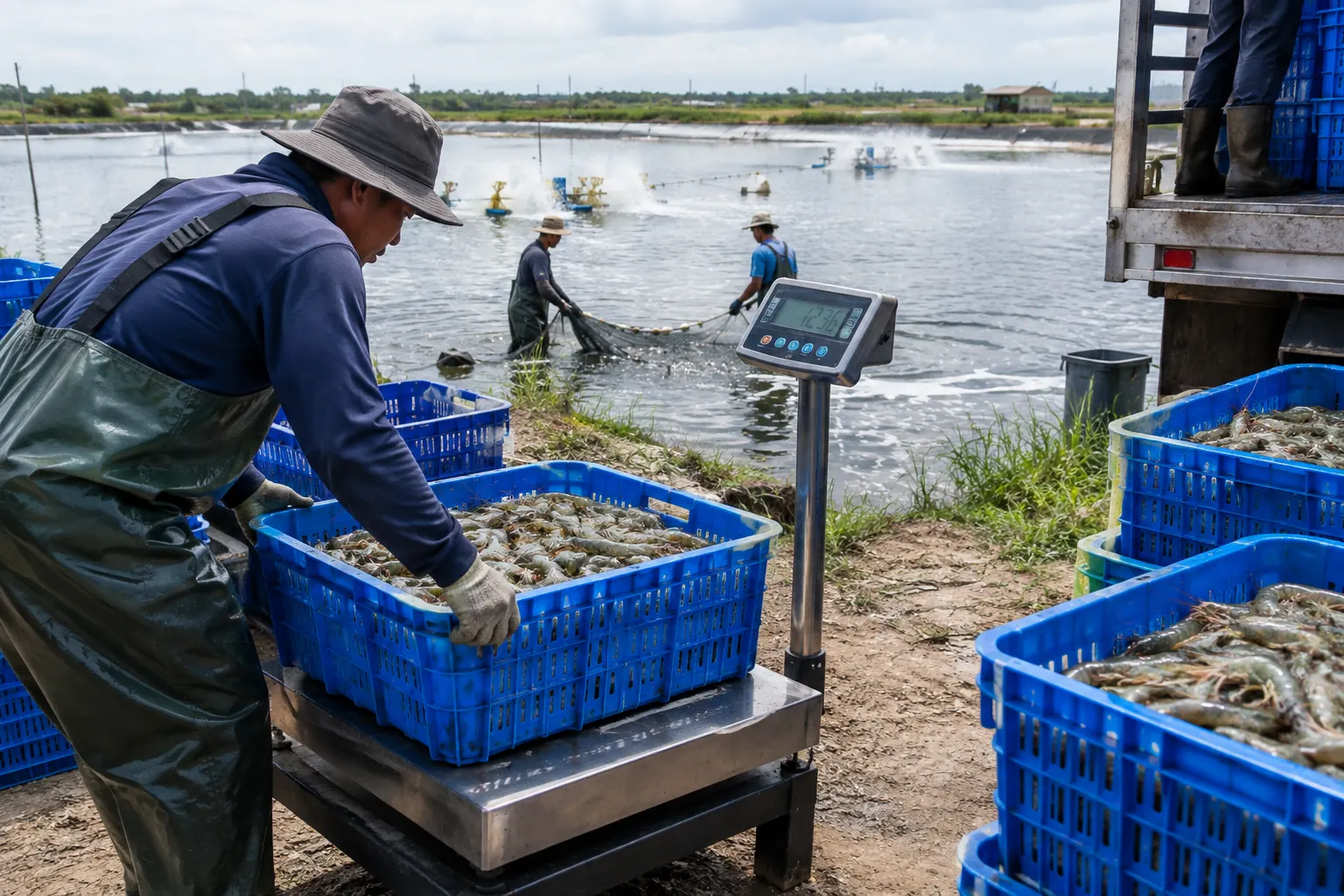
For the buyer, traceability starts at the lot they received. For the farm, that lot is a harvest: a pond, a date, a weight and a destination. A large pond often goes out in several partial harvests to different destinations, and each has to stand as its own line.
That is why the harvest record by destination is the hinge of the whole chain. If a harvest is noted only as a pond total, the link between a shipment and its source pond depends on someone remembering which truck left with what.
Treatments are controlled at harvest, not afterwards
Destination markets test imported shrimp for veterinary drug residues, and a rejected shipment is the most expensive way to find out a pond was harvested too early. The defence is not a check at the plant. It is the withdrawal period blocking harvest on the farm.
In AquaOS, treatments are recorded with their substance and withdrawal period, and that period gates every exit to food: a treated batch cannot be harvested to an order, sold or transferred until its clearance date. If the batch is split, the child batches inherit the open period, so the control follows the shrimp even when it changes pond. Any override of the withdrawal gate is stamped on the operation, so it can be audited later. Quarantine goes further and blocks every exit with no override at all.
Feed, by feed lot
The feed question becomes concrete when a supplier recalls a lot or a buyer asks for the specification of the feed used. Answering it means knowing which feed lot was drawn from the store for each pond, not just which brand the farm used. AquaOS attributes delivered feed to the feed lot it was drawn from, which leaves a record of which pond ate from which lot.
A history that already exists on the day it is asked for
The difference between a farm that answers in an hour and one that answers in a week is not the effort on the day of the request. It is whether the daily record, stocking, feeding, mortality, treatments and harvest, was kept per pond through the whole cycle. A per-pond report exportable to Excel or PDF is then a lookup, not a project. Keeping that record per pond, every day of the cycle, is what shrimp farm management software is for.
What to test in the demo
- A treatment and a harvest. Record a treatment with a withdrawal period and try to harvest that pond to an order before the date. The system should refuse.
- A split during withdrawal. Split the treated batch into another pond and check the withdrawal period travels with it.
- Two harvests, two destinations. Record a partial harvest to one destination and the rest to another, and check each line stays tied to the pond.
- The buyer’s question. Ask for one pond’s history from stocking to harvest, exported, without assembling it by hand.