Fish farm management software
AquaOS is fish farm management software for tilapia, carp, trout, barramundi and ornamentals, across ponds, raceways, tanks and cages. Inland finfish operations run several species at once, across units of different types, often on more than one site. AquaOS holds them in one record without forcing every pond into the same shape. Species are defined per operation, so catfish, pangasius, tambaqui or any other stock is set up the same way.
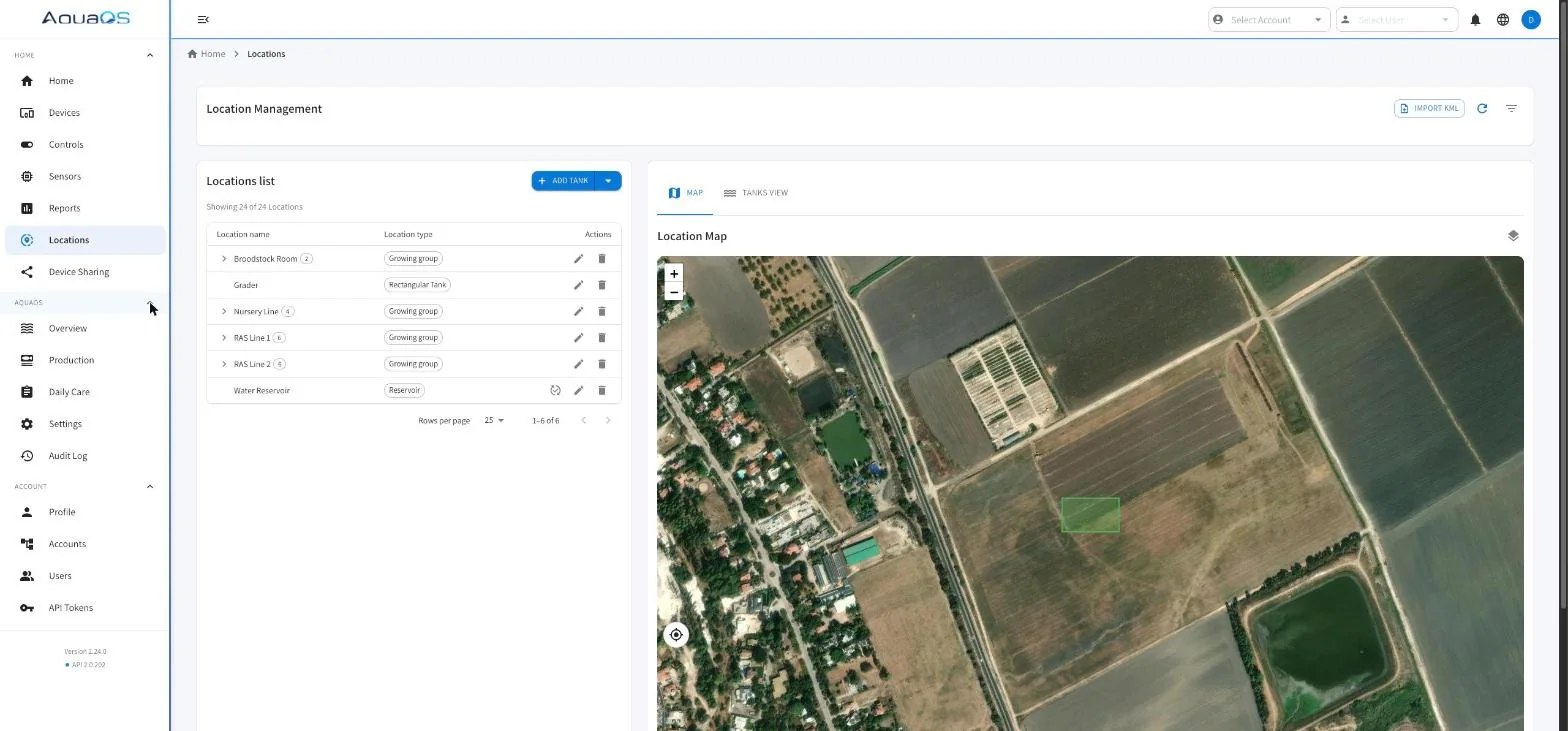
- Multi-species, multi-variety
- Ponds, raceways, tanks, cages
- Multi-site with rollups
- Per-pond reports for any period
How AquaOS fits an inland finfish operation
Several species in one operation
Tilapia, carp, trout, barramundi, and ornamentals can run side by side, each with its own varieties, cultivation phases, and feed table.
A unit is not tied to a species, so a pond can carry different stock from one cycle to the next.
Units of different types
Ponds, raceways, tanks, and cages are all growing units, but each type carries its own defaults for area, volume, and feeding.
A raceway does not have to be described as if it were a pond.
Multi-site with real rollups
Sites hold their own units and users, and reporting rolls up from the unit to the site to the operation.
A regional manager sees the aggregate; a site manager sees the site. The aggregate is derived from the same records, so there is nothing to reconcile between the two views.
Ornamental and specialty stock
Species with high unit value and small counts are held the same way as bulk production stock, with the same lineage and grading behaviour.
Varieties stay distinct through sorting, which matters where a strain is the product.
Feeding that follows growth
The daily ration for each unit comes from the farm own feed matrix, keyed to species, weight band, and phase.
The plan changes as fish grow without anyone re-deriving it, and confirmed feedings become the record.
Reports for outside readers
Per-pond production reports covering growth, feed, mortality, and water quality print as clean PDF and export to Excel.
They are built to hand to an insurer, a bank, a buyer, or an owner review.
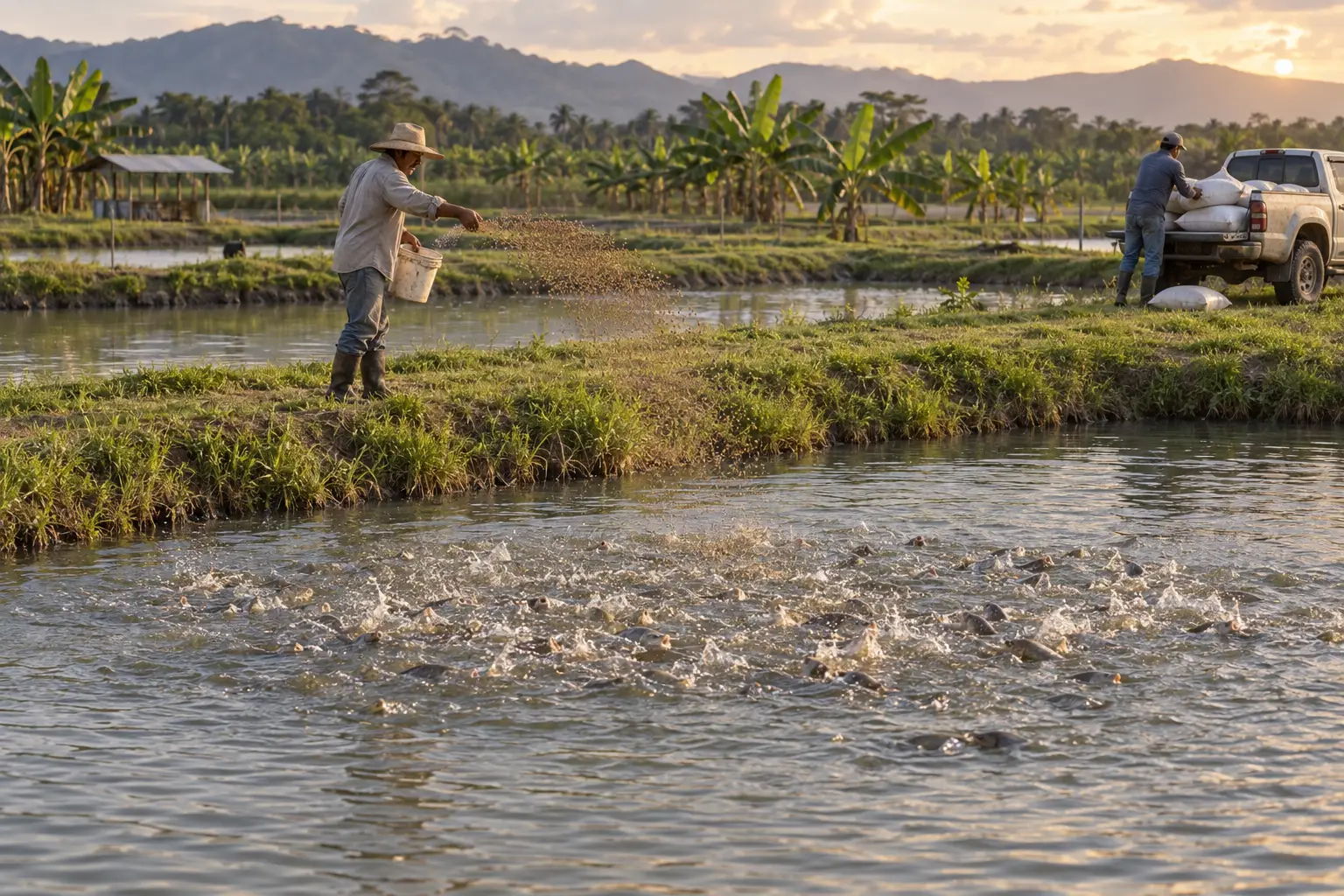
What one record changes on a fish farm
Species mix stops being a spreadsheet each
Running four species usually means four sheets that never roll up. One record with species as a property means the farm view exists without maintaining it separately.
The site view is trustworthy
Because rollups are computed from unit records, the number a regional manager sees is the same number the site manager sees, at a different level of aggregation.
Cycle history stays available
Closed batches keep their full history, so this cycle in a given pond can be compared against previous ones in growth, feed, and mortality.
Related reading
Production tracking
Batches, placements, splits, and lineage across units of any type.
Tilapia farm management software
What software should track across a tilapia cycle, and how to test it in a demo.
Trout farm management software
A feed table the farm owns, raceways that run in series, and grading most weeks.
Tilapia feeding chart and calculator
Reference feeding rates by weight band and a daily feed range for a pond or tank.
Growth rate calculator (SGR)
Specific growth rate and daily gain between two samplings.
FCR calculator
Feed conversion ratio from feed given and biomass gained.
Frequently asked questions
What does fish farm management software do?
It keeps the production record of every growing unit from stocking to harvest: the batches in each pond, raceway, tank or cage, what they were fed, samplings and growth, mortality with its cause, treatments, and the harvest. Feed conversion, biomass and per-pond reports are then calculated from that record instead of being assembled by hand from separate spreadsheets.
Can a fish farm start with one pond and no sensors?
Yes. A single pilot pond and a multi-site operation run on the same model, and stocking, feeding, sampling, mortality and reports all work on data entered by hand. Water quality sensors can be added to the same growing units later without redoing the setup.
Can one farm run several species at the same time?
Yes. Species and varieties are defined per operation and carried on every batch. Each species can have its own cultivation phases and feed table, and a growing unit is not tied to a species, so a pond can hold different stock from one cycle to the next.
Does AquaOS support raceways and cages as well as ponds?
Yes. Growing units have a type, and each type carries its own defaults for area, volume, and feeding. Ponds, raceways, tanks, cages, and incubators are all supported as unit types.
How does AquaOS handle an operation spread across several sites?
Sites hold their own growing units and users under one account. Reporting rolls up from the unit to the site to the whole operation, and users can be scoped to the sites they are responsible for.
Is it suitable for ornamental fish production?
Yes. Ornamental stock is held with the same batch, variety, and lineage model as production stock. Varieties stay distinct through grading and sorting, which matters when the strain is what the buyer is paying for.
See AquaOS on your operation
Bring a real production scenario. AquaOS is walked through on your operation, not a canned dataset.