Aquaculture traceability records: what audits ask for
Digital lot traceability became mandatory in the EU in January 2026. What a farm has to be able to show, and where those records come from.
7 min read
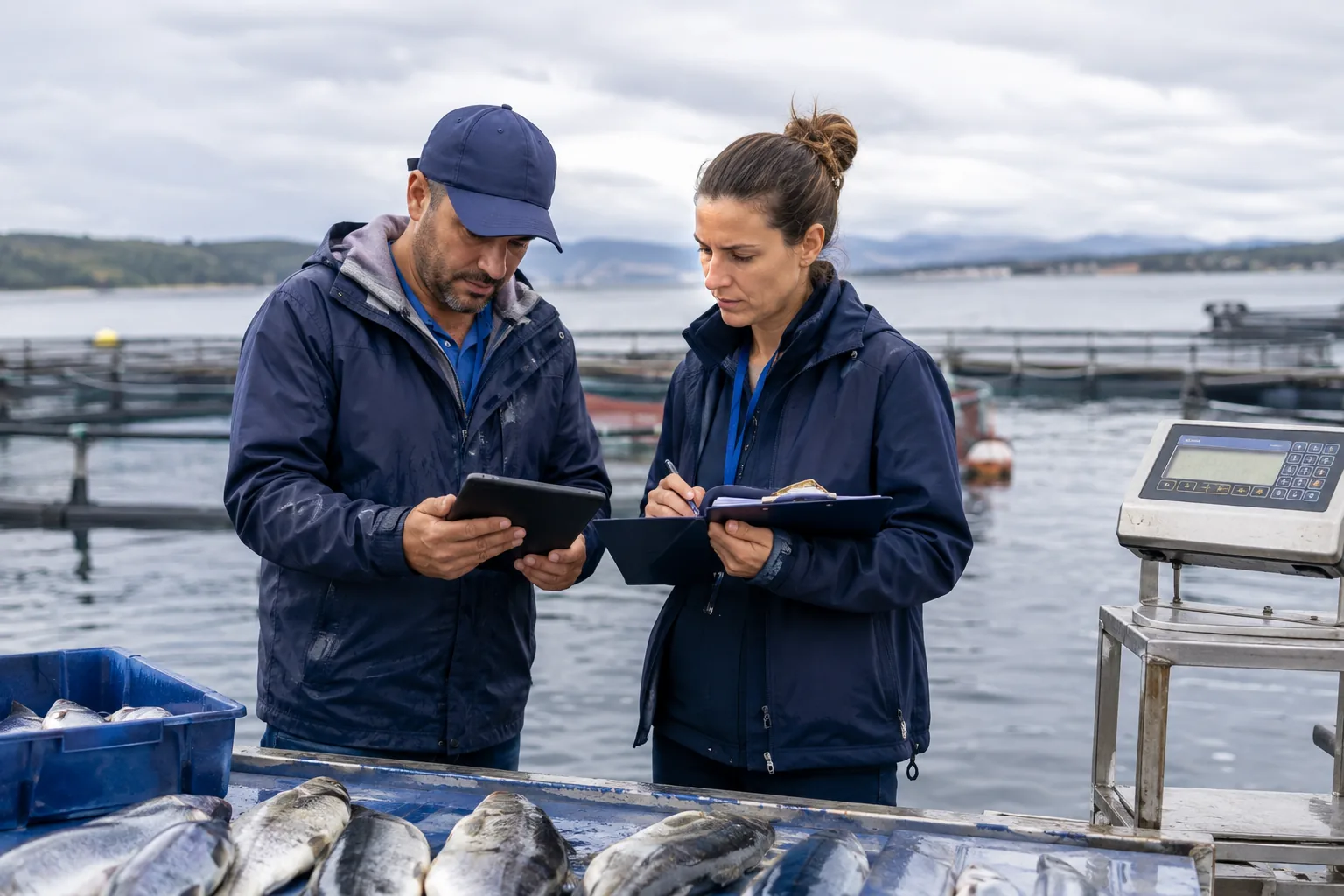
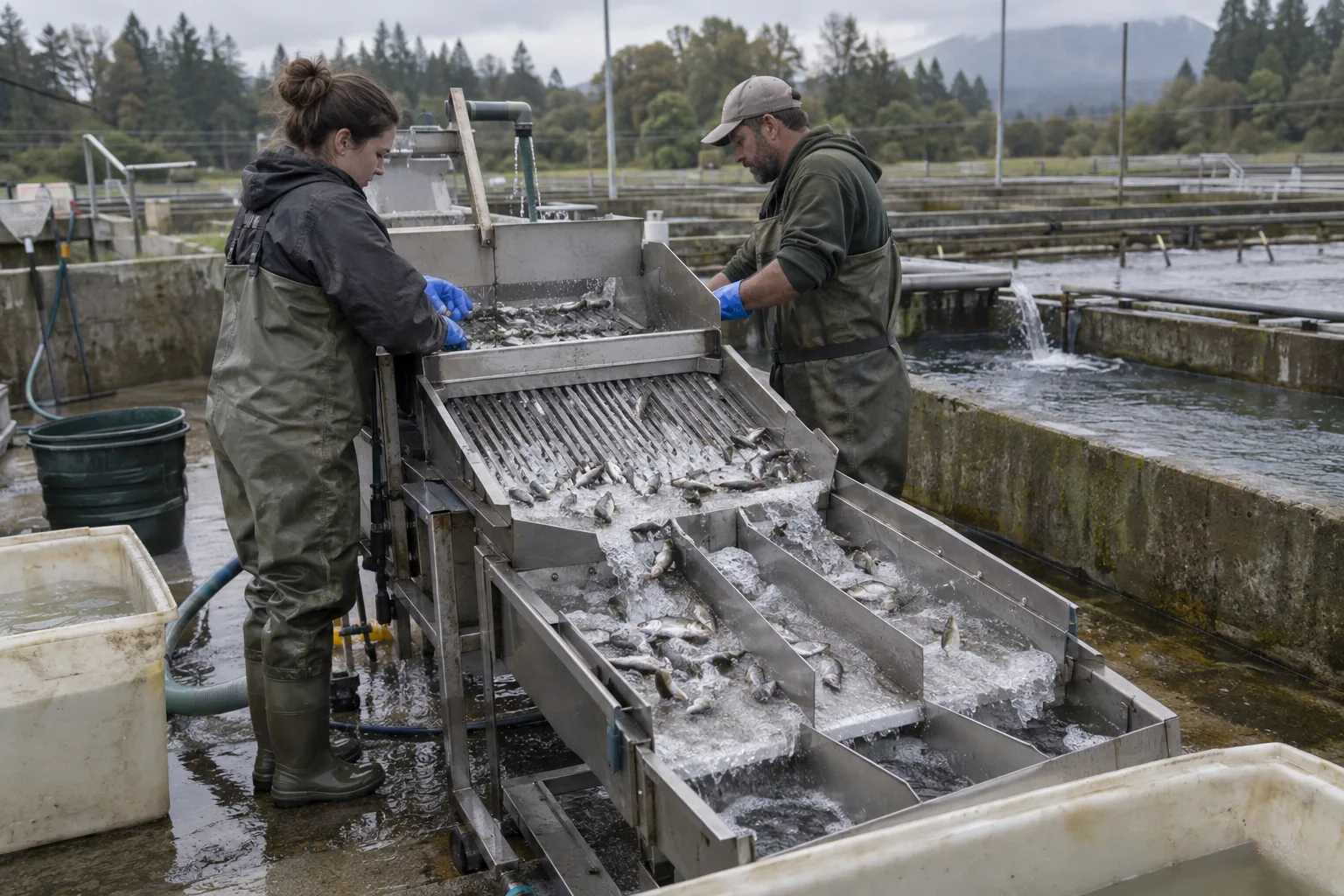
Traceability used to be something a farm assembled when somebody asked. A buyer wanted a document, an auditor scheduled a visit, and a manager spent a day pulling numbers out of feed sheets, mortality notebooks and a delivery file, then formatting them into something presentable.
That worked while the request was occasional. It stopped working on 10 January 2026.
What changed on 10 January 2026
Regulation (EU) 2023/2842, which amends the EU Control Regulation, made a minimum traceability data set mandatory at lot level. It applies to fresh and frozen fishery and aquaculture products, imported products included, and it took effect on 10 January 2026.
Two properties of the rule matter more than the rest. The information is per lot, not per shipment or per season, so it has to resolve to a specific quantity of specific animals. And it has to move digitally: recorded, then made available to the next operator in the chain and to the competent authorities on request.
The minimum set is short. For a farmed lot it includes a lot identification number, the FAO alpha-3 code of the species and its scientific name, the production area, the date of harvest, and the quantity in kilograms net weight or number of individuals. Prepared and preserved products and algae come into scope on 10 January 2029.
Does this reach a farm, or only a processor?
It reaches the farm. The obligation runs across operators at every stage from harvest to retail, and one item in the minimum data set exists only for farmed product. Article 58(5) words it as “the name and registration number of the producer or aquaculture production unit”. For imported product it is the name and, where available, the registration number of the aquaculture production unit.
That single field is the one worth reading twice. The text asks for a registered producer or production unit. It does not name a pond or a tank, and Regulation 2023/2842 does not define the term, so ask your competent authority how your farm and its units are registered. Article 56a adds that a lot of farmed product may contain only “aquaculture products of a single species, of the same product presentation and coming from the same aquaculture production unit”. The practical recommendation goes one level further than the wording: a record that says “harvested in March from the south ponds” is hard to stand behind, and a record that ties a harvest lot to a specific pond, on a specific date, at a specific quantity, answers the regulation and every buyer and auditor question that follows it.
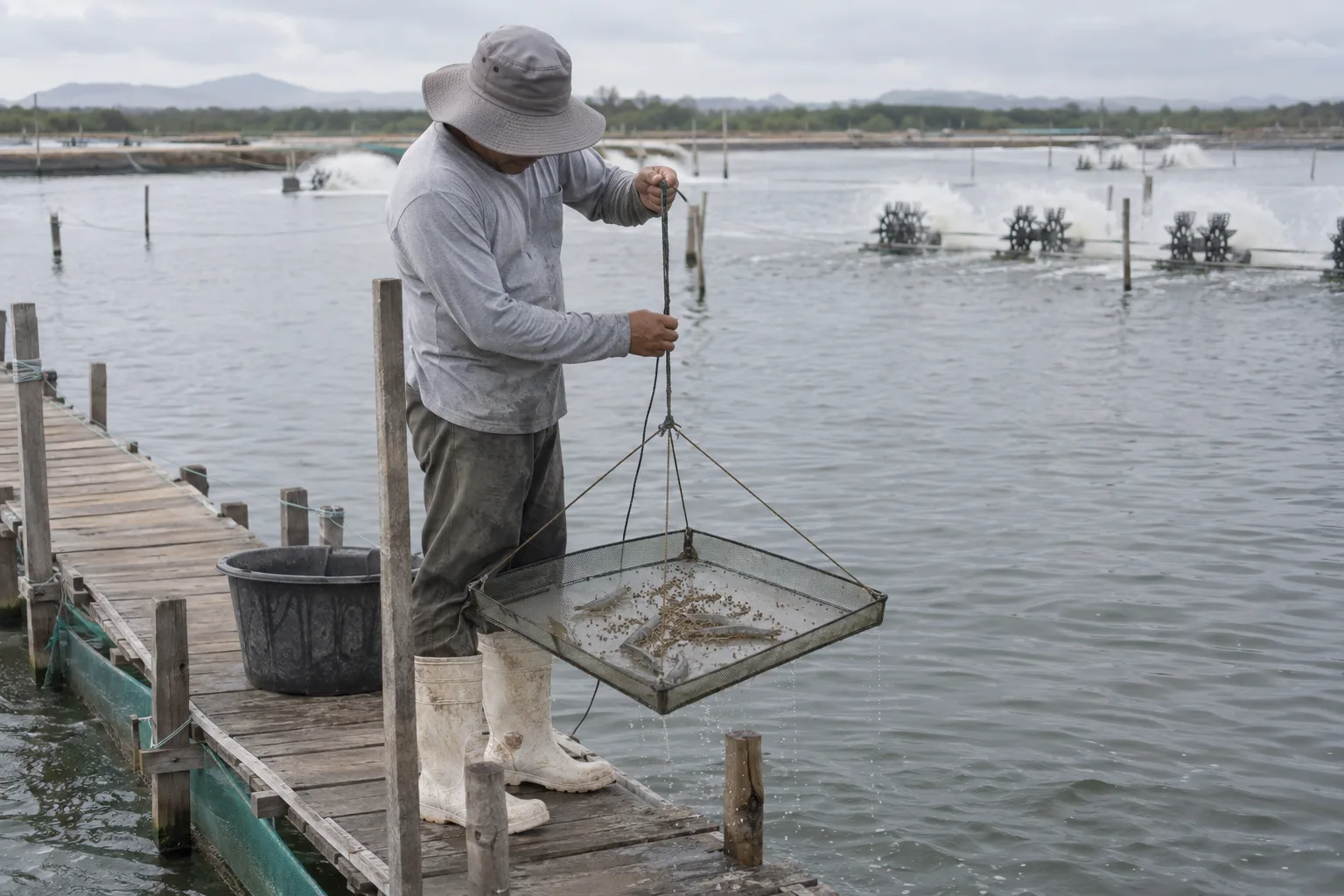
Most farms already know which pond a harvest came from on the day. The practical question is whether they will still know in two years, from a record rather than from memory, and whether they can produce it without reconstructing it.
What a certification auditor asks for that a regulator does not
Certification adds a different test. The regulation asks what a lot is. A certification audit asks whether the operation can prove it, on demand, under someone else’s control of the sample.
Under BAP, a farm has to demonstrate traceability one step forward and one step back: where the stock came from, and who received what was produced. Auditors run trace-back and trace-forward exercises annually, which means picking a lot and following it in both directions while somebody watches. ASC chain of custody adds separation: certified product has to stay identifiable and kept apart from uncertified product, and traceable back to a certified source.
The practical difference is that a regulator will usually accept a well-formed record. An auditor picks the lot, and picks it from the period you were least expecting.
The four questions every traceability request reduces to
Regulations, certification schemes and commercial buyers ask in different vocabularies, but the underlying questions are the same four. Every traceability system is an attempt to answer them without reconstruction.
What was it. Species and variety, held as identity on the stock itself rather than inferred from which pond it sat in.
Where was it. Which unit, over which dates. Not the current unit, the unit it was in at the time, which is a different question the moment anything moves.
What went into it. Feed, by product and quantity, on the days it was given, plus the days nothing was fed.
Who moved it and when. Stockings, splits, transfers, sorts, mortality events and the harvest itself, in order, with counts and weights attached.
A farm that can answer those four for any date in the last three years has traceability. A farm that can answer them only for the current cycle has a filing system.
Why the record has to exist before the request does
Traceability assembled after the fact is reconstruction, and reconstruction degrades. The people who remember are the ones who were there, the notebook that recorded a transfer was for the crew rather than for an auditor, and every step between the event and the document is a place for the number to change.
The alternative is that the chain is written as it happens. When a batch is split, both sides keep a link to the batch they came from. When a hatch creates a batch, that batch carries a link back to the broodstock group that spawned it. When a sorting session produces three size classes, each one knows the session and the units it drew from.
Do that consistently and lineage is not a report you run. It is a property the record already has, and producing it for a given lot is a lookup. See production tracking for how batches, placements and splits hold that chain, and broodstock and spawning for where it starts on a farm that produces its own stock.
What a farm should be able to produce on the day
Four documents cover almost every request an auditor, a regulator or a large buyer will make.
A per-unit report over a defined period, with the stock at both ends, what was fed, what died, what the water was doing, and a timeline of every event in order. This is the document that answers most of the four questions at once.
A stock position as of a date, including a date in the past, that says whether it is showing live data or a figure reconstructed from what was saved that day. A number that does not say which of the two it is has to be treated as the weaker one.
An event history for a unit or a batch, in date order, with counts and weights on every move.
A record of changes to the record: who changed what, when, and what the value was before. Certification schemes care about this more than farms expect, because a record that can be silently revised is a record that proves less than it appears to.
All four export to Excel and to print-ready PDF in reporting and traceability, and the same data is reachable through the API if it has to land in a buyer’s system rather than a person’s inbox.
Assembling a history, or retrieving one
AquaOS holds the farm-side production record these requests draw on. It does not file anything with anybody, and no software makes a farm compliant on its own. What it changes is which of the two situations you are in when the request arrives: assembling a history, or retrieving one.
The distinction is not visible until somebody asks. A farm running on feed sheets and a delivery file looks identical to a farm running on a production record right up to the morning an auditor picks a lot from eighteen months ago.
If you want to know which one you are, run the test yourself. Pick a lot you delivered last year, and try to name the unit it came from, the stock it descended from, what it was fed, and every time it moved. If that takes a day, it will take a day when it counts. Bring the same lot to a demo and we will run it against the record instead.
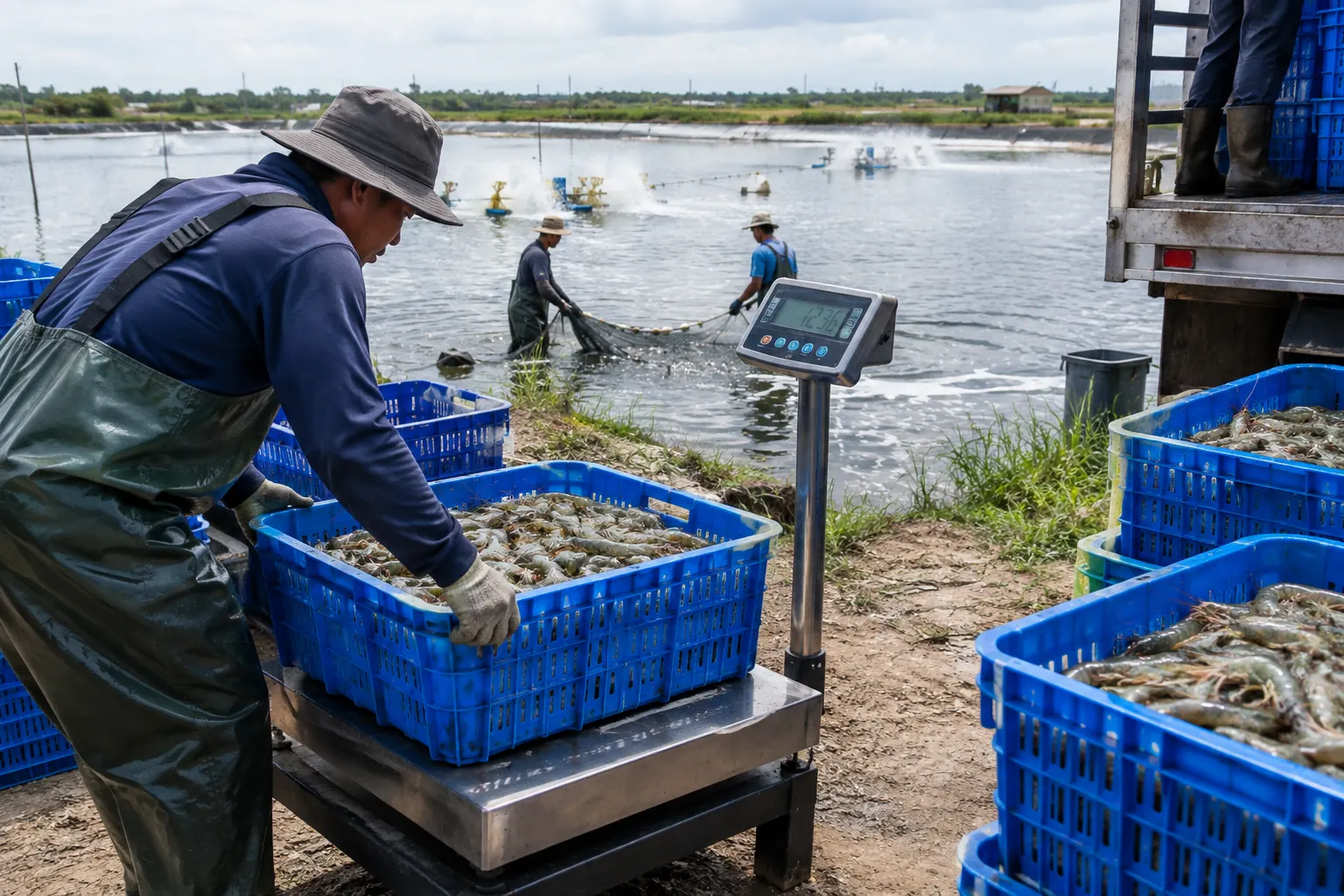
For shrimp specifically, export shrimp traceability covers the pond record behind a shipment, including how a withdrawal period is enforced at harvest.