Broodstock and spawning management software
Broodstock management software records the groups, their spawning events, the hatch results and the failures, and turns the resulting fry into ordinary production batches. Most production software starts at the fingerling delivery. Operations that produce their own stock need the record to start earlier, at the group that spawned. AquaOS treats spawning as production, so the batch in the grow-out pond knows which broodstock it came from.
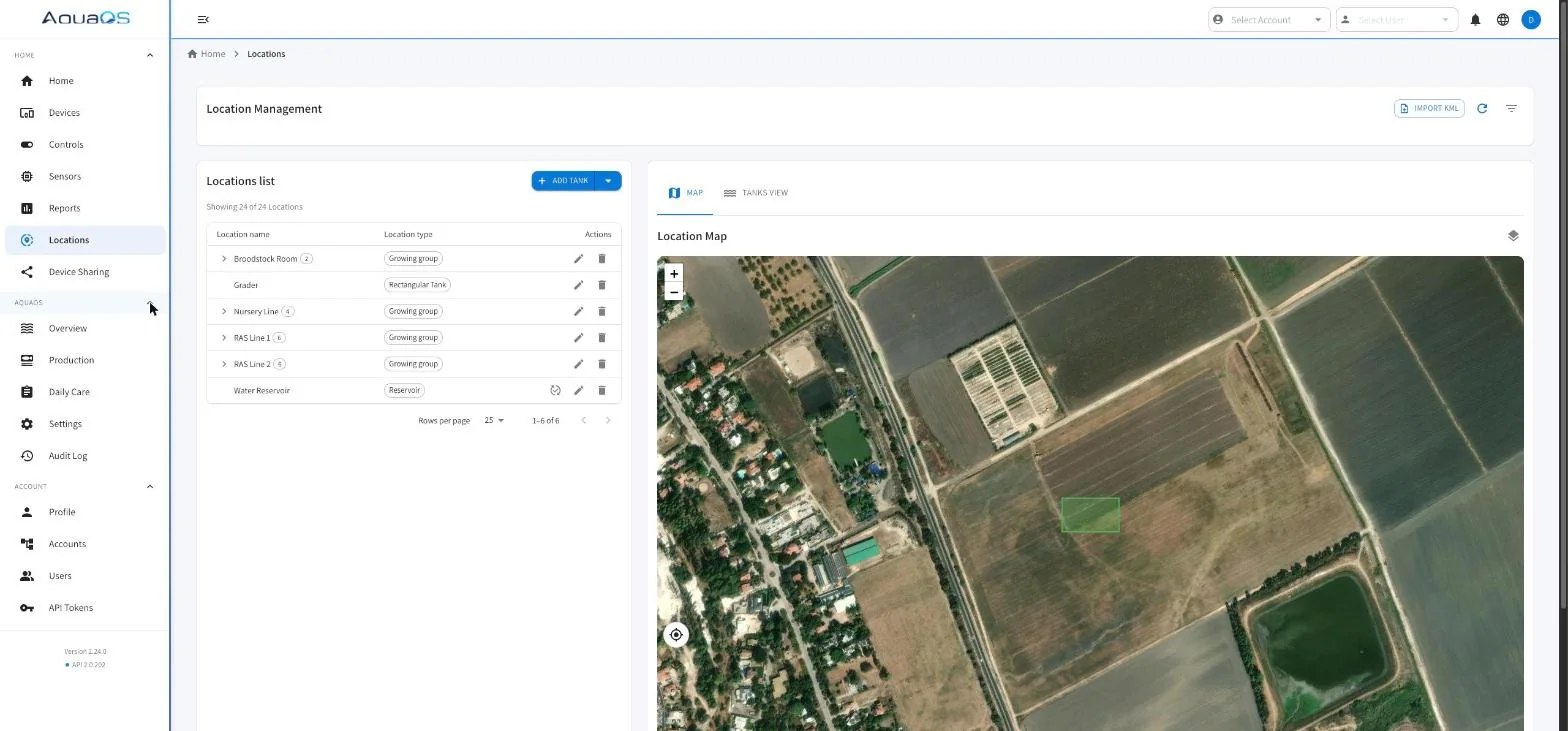
- Broodstock groups per species and variety
- Spawning events with outcome
- Hatch results become batches
- Failed spawns recorded, not deleted
How AquaOS handles reproduction
Broodstock groups
Broodstock are held as named groups with species, variety, and their own placements in units.
A group is a durable entity that persists across seasons, which is what makes performance comparable from one spawning run to the next.
Spawning events
A spawning event is recorded against the broodstock group that produced it, with date, unit, and outcome.
The event is the anchor everything downstream hangs from.
Hatch results
A hatch turns a spawning event into stock: a count, an average weight, a destination unit, and a new batch.
From that moment the fry are ordinary batches and every other module, feeding, sorting, mortality, reporting, works on them without special cases.
Failed spawns
A spawn that produced nothing is recorded as a failure with a reason, not erased.
Reproduction performance is only assessable when the failures are in the record alongside the successes.
Lineage from the egg
Because the hatch creates the batch, the lineage chain starts at the broodstock group.
A grow-out batch, a size class from a sorting session, and eventually a harvest lot all trace back to the group that spawned them.
Species and varieties
Species and their varieties are defined per operation, and broodstock groups are held per variety.
Operations running several strains keep them distinct through spawning, nursery, grow-out, and harvest.
A spawning run in AquaOS
-
Group in place
A broodstock group is defined for a species and variety and placed in a holding unit, with its own feeding and mortality record like any other stock.
-
Spawning recorded
The spawning event is logged against the group with date, unit, and outcome, whether it produced eggs or not.
-
Hatch enters production
A successful hatch creates a batch with a count and an average weight in a destination unit. The new batch carries a lineage link back to the group.
-
Nursery and beyond
The fry batch is fed from the matrix, split as density requires, sorted into size classes, and eventually moved to grow-out, all in the same record.
What a continuous record from the egg gives you
Broodstock performance is comparable
When spawning events, hatch counts, and failures are all attributed to durable groups, one group can be compared against another over seasons instead of by recollection.
The hatchery is not a separate system
Fry from an on-site hatch and fingerlings from a supplier are the same kind of record. There is no reconciliation step between a hatchery spreadsheet and a grow-out system.
Traceability starts where production starts
A harvest lot that traces only to a nursery pond answers half the question. Starting the chain at the broodstock group answers all of it.
Frequently asked questions
Can broodstock be tracked separately from production stock?
Yes. Broodstock are held as their own groups with their own placements, feeding, and mortality, while remaining visible in the same platform. They are not counted as production inventory, and their performance is tracked across spawning runs.
What happens to a spawning attempt that fails?
It is recorded as a failed spawn with a reason. Failures stay in the record so reproduction performance for a group reflects both outcomes. Deleting failures is how a hatchery ends up believing a group performs better than it does.
Does the fry batch behave differently from a purchased batch?
No. A hatch creates an ordinary batch. Feeding, splitting, sorting, mortality, and reporting all treat it the same way as stock bought from a supplier. The only difference is the lineage link pointing back to the broodstock group.
Can several varieties or strains be kept separate?
Yes. Species and varieties are defined per operation and broodstock groups are held per variety, so strains stay distinct through spawning, nursery, grow-out, and harvest.
See AquaOS on your operation
Bring a real production scenario. AquaOS is walked through on your operation, not a canned dataset.